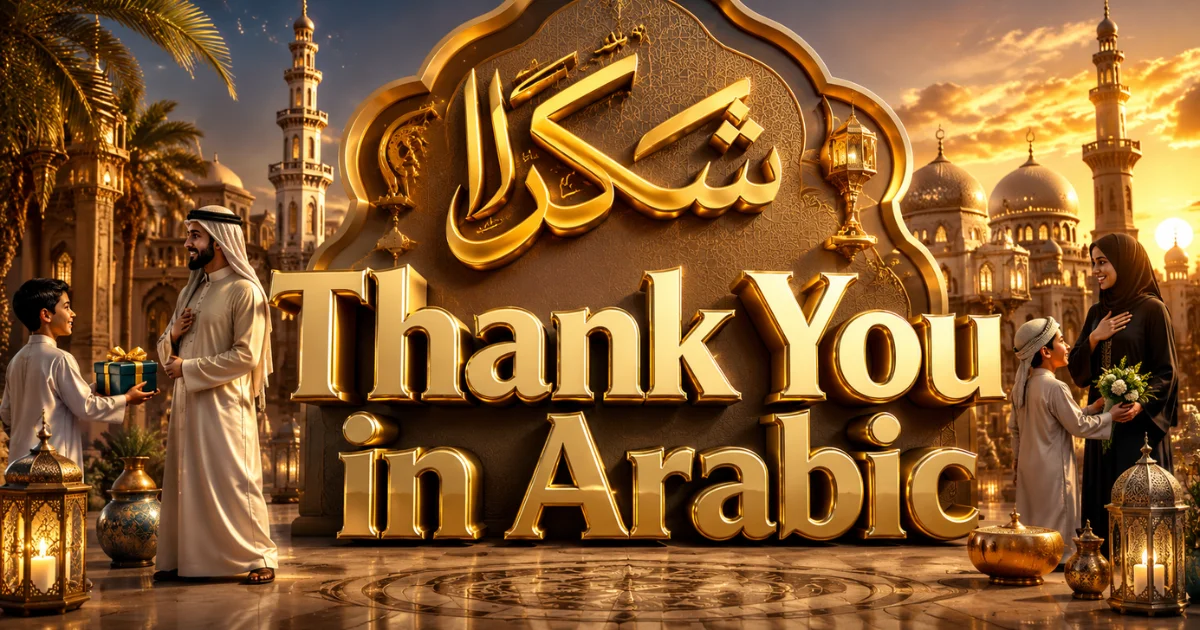
Arabic has over 40 beautiful ways to say thank you — and each one carries its own feeling, culture, and depth. Whether you’re traveling to Jordan, chatting with Arab friends, or learning the language, this guide gives you the most useful short thank you in Arabic phrases across every dialect.
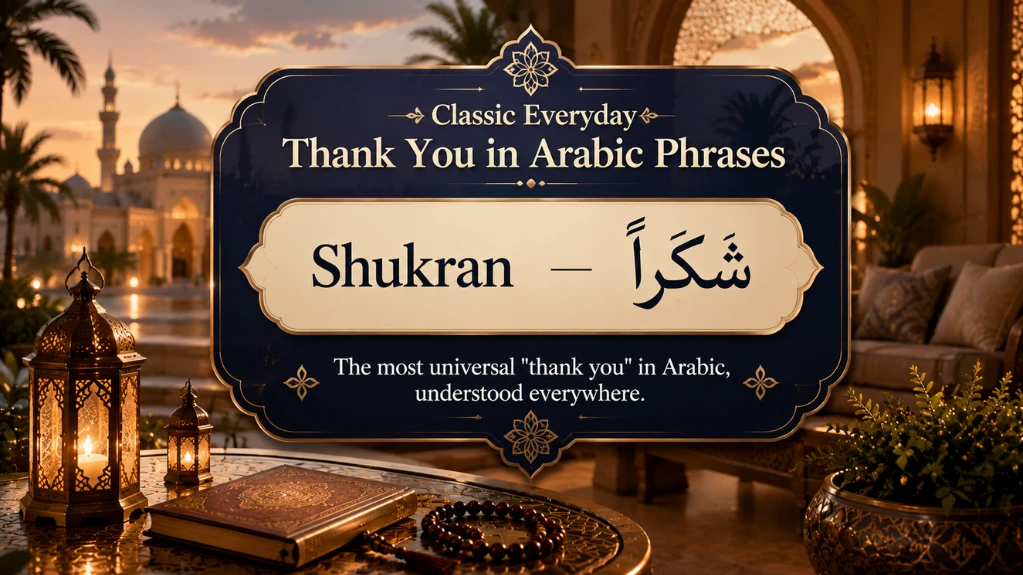
Classic Everyday Thank You in Arabic Phrases
classic-everyday-thank-you-in-arabic-phrases
These are the most widely understood Arabic thank you expressions — used from Cairo to Riyadh, in both casual conversations and formal settings.
➤ Shukran — شكراً — The most universal “thank you” in Arabic, understood everywhere.
➤ Shukran Jazeelan — شكراً جزيلاً — A stronger, more heartfelt “thank you very much.”
➤ Shukran Lak — شكراً لك — Directed personally at someone, meaning “thank you, to you.”
➤ Alf Shukr — ألف شكر — Literally “a thousand thanks,” used for extra emphasis.
➤ Ashkorok — أشكرك — Means “I thank you” — sincere, direct, and slightly formal.
Shukran comes from the Arabic root sh-k-r (شكر), meaning to acknowledge a favor. It works in every Arab country, every age group, and every situation.
Egyptian Arabic is the most widely understood dialect in the Arab world, thanks to Egyptian cinema and music. These phrases will make any Egyptian smile.
➤ Moutashekkir — متشكر — Said by males to mean “I am grateful.”
➤ Moutashekkira — متشكرة — The female version of the same grateful expression.
➤ Motashakkereen — متشكرين — Used for groups, meaning “we are all thankful.”
➤ Teslam Eedeek — تسلم إيديك — “May your hands be safe” — said when someone helps you with their hands.
➤ Moutashaker Awi — متشكر اوي — Very Egyptian and casual, meaning “very, very thankful.”
Egyptians are known for their warmth. Using even one of these Egyptian Arabic thank you phrases will instantly create a connection.
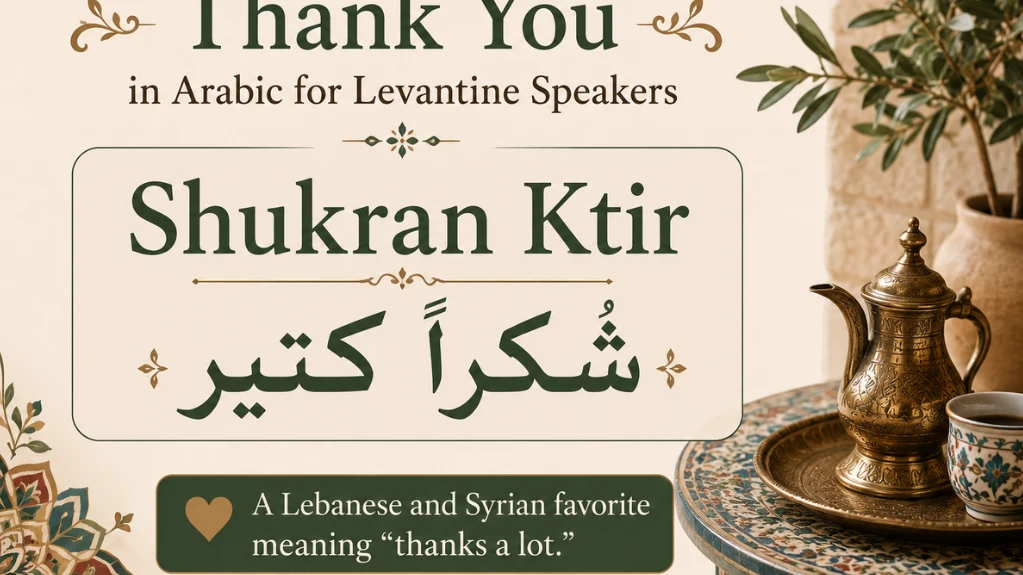
Short Thank You in Arabic for Levantine Speakers
thank-you-in-arabic-for-levantine-speakers
Levantine Arabic is spoken in Jordan, Syria, Lebanon, and Palestine. These phrases feel natural and friendly in everyday Levantine conversations.
➤ Shukran Ktir — شكراً كتير — A Lebanese and Syrian favorite meaning “thanks a lot.”
➤ Yisalamo — يسلموا — Means “may you be safe” — commonly said when receiving a gift or favor.
➤ Tislam — تسلم — One of the most flexible phrases in the Levant, meaning “bless you / thank you.”
➤ Mammnoonak — ممنونك — Means “I’m grateful to you” — used between friends and family.
➤ Kullak Zouq — كلك ذوق — Means “you have such good taste / how kind of you” — a warm compliment response.
One important note: native Levantine speakers rarely say شكراً alone. They use these richer expressions far more naturally.
Short Thank You in Arabic for Gulf Arabic Speakers
Gulf Arabic is used across Saudi Arabia, UAE, Kuwait, Qatar, Bahrain, and Oman. These expressions carry a dignified and generous tone.
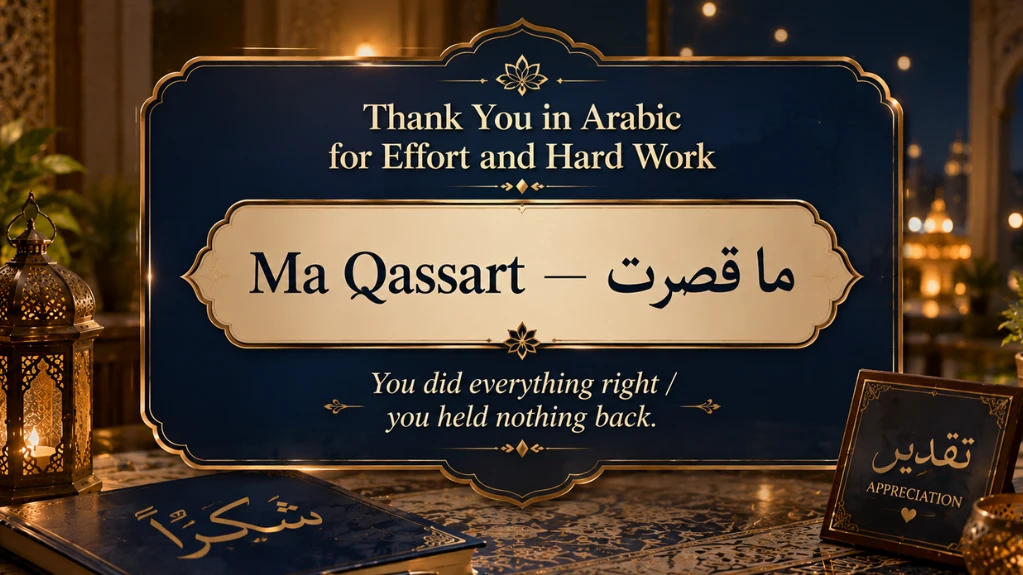
➤ Ma Qassart — ما قصرت — Means “you spared no effort” — one of the most satisfying phrases to hear.
➤ Mashkoor — مشكور — Means “you are thanked” — widely used across Gulf countries.
➤ Ya Halah — يا هلا — A warm Gulf response meaning “you’re so welcome / how generous.”
➤ Yaatik Al Afye — يعطيك العافية — Means “may God grant you health” — used after any service or effort.
➤ Mashkoora — مشكورة — The female form of Mashkoor, used when thanking a woman.
Ma Qassart is considered by many Arabs as one of the most meaningful ways to say thank you — it tells someone they gave their absolute best.
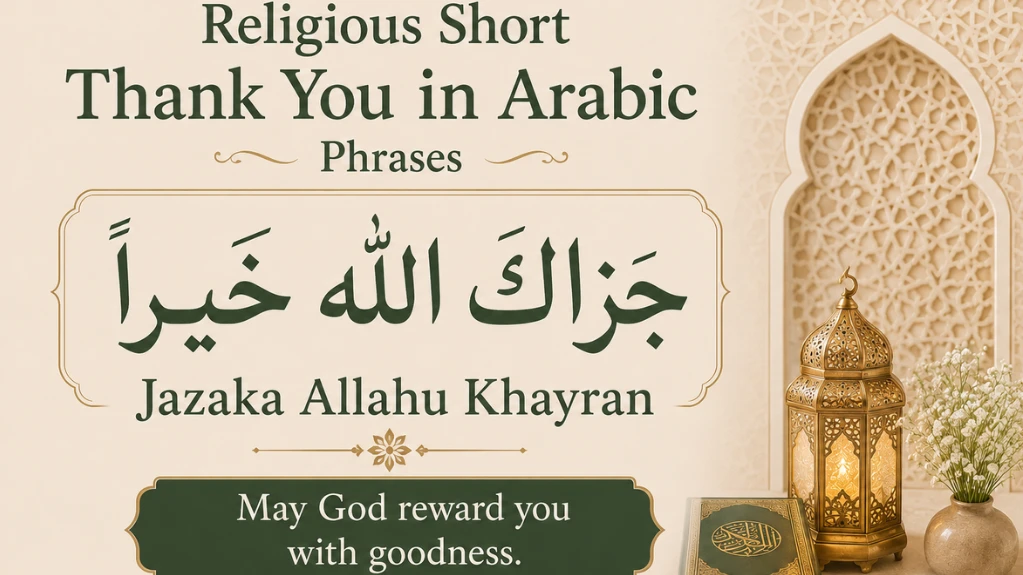
Religious Short Thank You in Arabic Phrases
religious-short-thank-you-in-arabic-phrases
Islam and Arabic language are deeply connected. Religious thank you phrases are not just formal expressions — they are genuine prayers used daily by millions of Arabic speakers worldwide.
➤ Jazaka Allahu Khayran — جزاك الله خيراً — “May God reward you with goodness” — used in Islamic communities globally.
➤ Barak Allahu Feek — بارك الله فيك — “May God bless you” — common in Gulf and North African regions.
➤ Allah Yekather Khairak — الله يكثر خيرك — “May God increase your goodness” — a warm, generous prayer.
➤ Ja’alahu Allahu Fi Mizan Hasanatik — جعله الله في ميزان حسناتك — “May God count it in your good deeds” — deeply sincere.
➤ Allah Yisaedak — الله يسعدك — “May God make you happy” — simple, sweet, and always appropriate.
These Islamic Arabic thank you expressions are used even in casual daily conversations — not just in religious settings.
Short Thank You in Arabic for Compliments and Kind Words
When someone praises your home, your cooking, your style, or your Arabic skills — these responses feel far more natural than a plain Shukran.
➤ Tislam — تسلم — A versatile, warm response to any compliment across the Levant.
➤ Kullak Zouq — كلك ذوق — “You’re so kind / what good taste you have” — great for responding to compliments.
➤ Ma Fi Zitak — ما في زيتك — “There’s no one like you” — shows deep appreciation for someone’s kindness.
➤ Allah Yibayyed Wajhak — الله يبيض وجهك — “May God honor you” — used when someone saves you from embarrassment.
➤ Momtanon Lak — ممتنّ لك — “I am truly grateful to you” — elegant and sincere in any setting.
Arab culture places enormous value on verbal generosity. Responding well to a compliment is considered a sign of good character.
Short Thank You in Arabic for Effort and Hard Work
thank-you-in-arabic-for-effort-and-hard-work
These phrases go beyond “thanks.” They recognize someone’s time, energy, and dedication — something Arabic culture values deeply.
➤ Ma Qassart — ما قصرت — “You did everything right / you held nothing back.”
➤ Ta’abnaak — تعبناك — “Sorry for your trouble / thank you for your effort” — shows humility.
➤ Yisalamo Aidayk — يسلموا إيديك — “May your hands be blessed” — perfect after physical help or handmade gifts.
➤ Salimat Yadak — سلمت يداك — A more formal MSA version meaning “God bless your hands.”
➤ Yeayishak — يعيشك — “Wishing you a long life” — a heartfelt Tunisian and Algerian expression of gratitude.
These effort-based Arabic thank you phrases communicate respect and awareness — qualities that make a real difference in Arab social culture.
Formal Short Thank You in Arabic for Professional Settings
Need to thank someone in a business email, a government office, or a formal meeting? These formal Arabic thank you expressions keep the right tone.
➤ Shukran Jazelan — شكراً جزيلاً — The standard formal “thank you very much” used in letters and official settings.
➤ Mamnounak — ممنونك — “I owe you / I’m indebted to you” — shows professional respect.
➤ Momtanon Laka — ممتنّ لك — “I am truly grateful” — polished and appropriate for formal contexts.
➤ Ashkoroka — أشكركَ — “I formally thank you” — used in written and spoken formal Arabic.
➤ Mashkoor Seedee — مشكور سيدي — “Thank you, sir” — the most respectful way to thank a senior person.
In professional Arabic communication, tone and word choice signal respect. Using the right phrase shows cultural intelligence.
Conclusion
Arabic gratitude goes far deeper than a single word — it carries warmth, religion, culture, and genuine human connection in every phrase. Start with Shukran, then explore these 40 short thank you in Arabic expressions to speak with authenticity and earn genuine smiles from native speakers.
FAQs
How do Arabs say thank you?
Arabs most commonly say Shukran (شكراً), but also use phrases like Mashkoor, Ma Qassart, and Jazaka Allahu Khayran depending on dialect, formality, and region.
What does Yalla Wallah mean?
Yalla means “let’s go” or “come on,” while Wallah is an oath meaning “I swear by God” — used together for strong emphasis or surprise in everyday Arabic speech.
What is masa al khair?
Masa al Khair (مساء الخير) means “Good evening” in Arabic and is a polite, warm evening greeting used across all Arab-speaking countries.
How do you say thank you to all in Arabic?
To thank a group, say Shukran Lakum (شكراً لكم) in Modern Standard Arabic, or Mashkoreen (مشكورين) in spoken dialects — both mean thank you to all.
What is “I love you” in Egyptian?
In Egyptian Arabic, “I love you” is Bahebak (بحبك) when said to a male and Bahebik (بحبك) when said to a female — one of the most recognized Egyptian expressions worldwide.
David Sterling is the author and faith writer behind PrayersHands, sharing daily prayers, spiritual guidance, hope, and biblical inspiration to help readers find peace, strength, and deeper faith in God.