Korean has no single “thank you.” It has levels — and using the wrong one can feel awkward fast. This guide gives you all 40 short thank you in Korean phrases, from boardroom-formal to best-friend casual, so you always say exactly the right thing.
➤ 고마 (Goma) — Playful clipped form of gomawo, used between close friends
➤ 땡큐~ (Ddaengkyu~) — Same as ddaengkyu but with a soft trailing tone, feels lighter and cuter
➤ 완전 고마워 (Wanjeon gomawo) — “Totally thankful,” popular with teens and young adults
Thank You So Much in Korean
Sometimes a simple thank you isn’t enough. These phrases express deeper gratitude clearly and naturally.
➤ 정말 감사합니다 (Jeongmal gamsahamnida) — “Thank you so much,” respectful and deeply felt
➤ 너무 고마워요 (Neomu gomawoyo) — “Thank you so much,” warm and natural in everyday speech
➤ 너무너무 고마워 (Neomu neomu gomawo) — “Thank you sooo much,” affectionate and casual between close people
➤ 진짜 고마워 (Jinjja gomawo) — “I really mean it, thank you,” direct and sincere
➤ 많이 감사합니다 (Mani gamsahamnida) — “Thank you a lot,” respectful and widely understood
Thank You in Korean for Friends and Family
thank-you-in-korean-for-friends-and-family
Korean has specific words for relationships — oppa, unnie, hyeong, noona — and thank yous can include them naturally.
➤ 고마워, 친구 (Gomawo, chingu) — Simple and sweet, “thanks, friend”
➤ 사랑해, 고마워 (Saranghae, gomawo) — “Love you, thank you,” warm and personal for family
➤ 고마워요, 언니 (Gomawoyo, eonni) — “Thank you, older sister,” used by girls to an older female friend
➤ 감사해, 오빠 (Gamsahae, oppa) — “Thanks, oppa,” a girl thanking an older male she’s close with
➤ 진짜 고마워, 형 (Jinjja gomawo, hyeong) — “Really thanks, bro,” used between guys in a close bond
Thank You Phrases for K-Drama and K-Pop Fans
If you watch K-dramas or follow K-pop idols, you’ve heard these. They’re natural, emotional, and very Korean.
➤ 감사합니다, 선생님 (Gamsahamnida, seonsaengnim) — “Thank you, teacher,” a classic K-drama line full of respect
➤ 정말 감사해요 (Jeongmal gamsahaeyo) — Heard constantly in emotional drama scenes, means “thank you so much”
➤ 고마워요, 진짜로 (Gomawoyo, jinjjaro) — “Thank you, for real,” natural and heartfelt dialogue phrase
➤ 당신 덕분이에요 (Dangsin deokbunieyo) — “It’s all thanks to you,” a deeply emotional phrase used in romantic moments
➤ 도와줘서 고마워 (Dowajwoseo gomawo) — “Thanks for helping me,” warm and common in drama friendships
Professional and Business Thank You in Korean
professional-and-business-thank-you-in-korean
In Korean business culture, polite speech isn’t optional — it’s expected. These phrases show professionalism and respect.
➤ 협조해 주셔서 감사합니다 (Hyeopjohaejusyeoseo gamsahamnida) — “Thank you for your cooperation,” standard in business emails
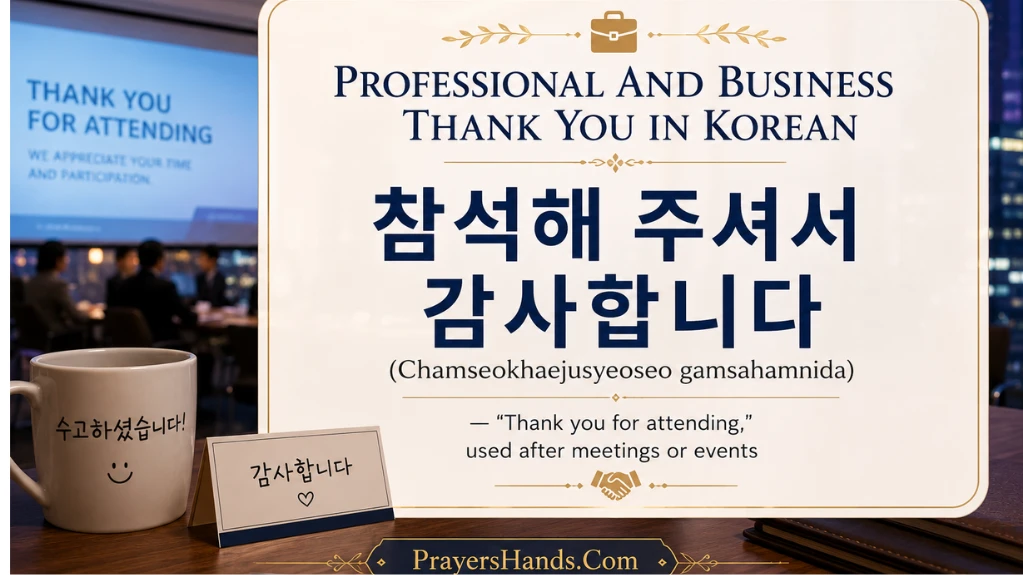
➤ 참석해 주셔서 감사합니다 (Chamseokhaejusyeoseo gamsahamnida) — “Thank you for attending,” used after meetings or events
➤ 도와주셔서 감사합니다 (Dowajusyeoseo gamsahamnida) — “Thank you for your help,” respectful and widely appropriate
➤ 수고하셨습니다 (Sugohasyeotseumnida) — “Thank you for your hard work,” commonly said at the end of a workday
➤ 성원해 주셔서 감사합니다 (Seonwonhaejusyeoseo gamsahamnida) — “Thank you for your support,” used in speeches and formal addresses
Cute and Expressive Short Thank You in Korean
These phrases carry warmth, personality, and emotion — great for social media captions, messages, and everyday affection.
➤ 고마워요~ (Gomawoyo~) — The soft trailing tone makes this feel gentle and friendly
➤ 고마워! ♡ (Gomawo!) — Short, sweet, and full of genuine affection
➤ 완전 감사! (Wanjeon gamsa!) — “Totally grateful!” energetic and fun to say
➤ 넘 고마워 (Neom gomawo) — Youthful texting shorthand for “so thankful,” widely used online
➤ 고마워요, 최고예요! (Gomawoyo, choegoyeyo!) — “Thank you, you’re the best!” enthusiastic and expressive
Conclusion
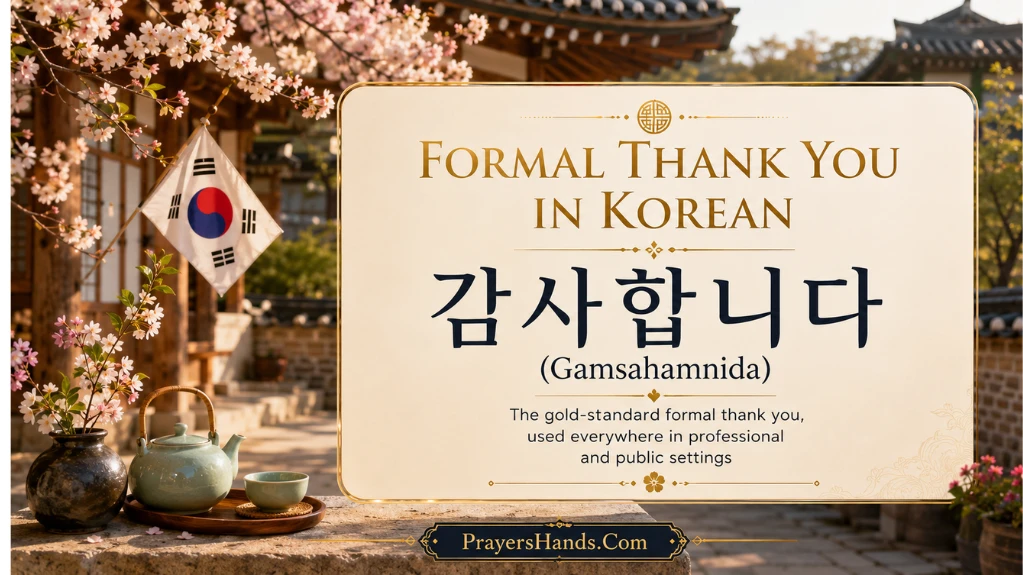
These 40 short thank you in Korean phrases cover every situation — formal, casual, business, romantic, and slang. Start with 감사합니다 when in doubt, switch to 고마워 with close friends, and you’ll sound natural in Korean faster than you think.
FAQs
How to say Korean in thank you?
The most common way is 감사합니다 (Gamsahamnida), used in formal and everyday situations across Korea.
What is kamsamida?
It is a casual romanized spelling of 감사합니다, the formal Korean word meaning “thank you.”
Is it rude to not say gomawoyo?
Yes, skipping a thank you in Korean culture can feel cold and disrespectful, especially with elders or coworkers.
How do you say thank you so much really in Korean?
Say 진짜 너무 고마워요 (Jinjja neomu gomawoyo) — it means “really, thank you so much” in a genuine, natural way.
Is it Kamsahamnida or Gamsahamnida?
Both refer to 감사합니다 — Gamsahamnida is the more accurate modern romanization used today.
What are 7 different ways to say thank you?
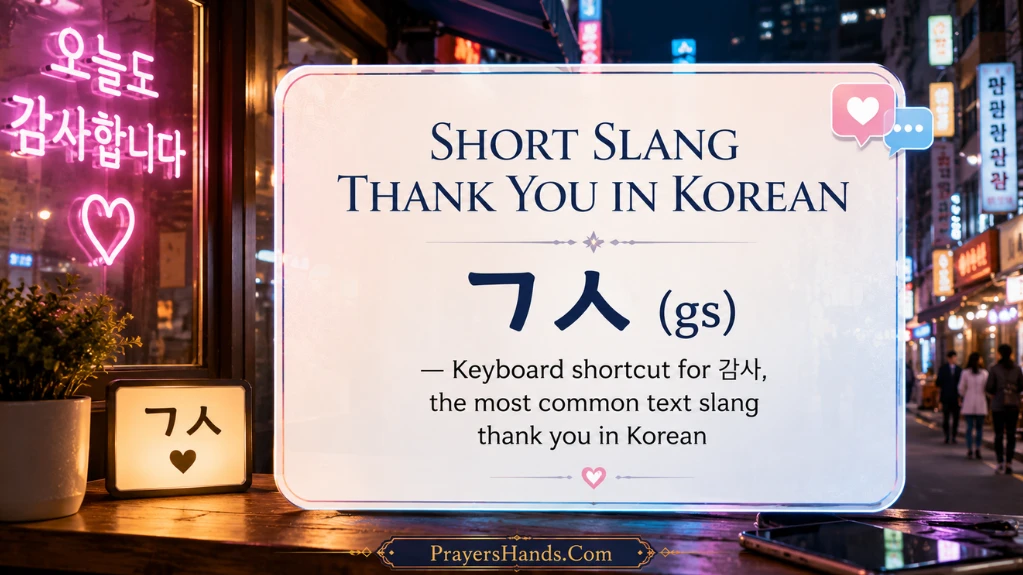
감사합니다, 고맙습니다, 고마워요, 고마워, 감사해요, 정말 고마워, and ㄱㅅ — ranging from deeply formal to everyday slang.
David Sterling is the author and faith writer behind PrayersHands, sharing daily prayers, spiritual guidance, hope, and biblical inspiration to help readers find peace, strength, and deeper faith in God.